

Holiday Let Management in Northumberland
In this guide, we’ll explore the benefits of professional holiday let management in Northumberland, what to look for in...


by Gaynor Anderson / Owners
Thinking about buying a holiday home? Alongside choosing the perfect property, it’s worth taking the time to understand the costs that come with your purchase. Stamp Duty Land Tax (SDLT) can be one of the largest upfront expenses, especially if you’re adding to your property portfolio.
This guide explains the 2026 rates, outlines when additional charges may apply, and helps you plan confidently for your investment.

If you would like more help or want to find out more about letting your holiday home with Northumbria Coast & Country Cottages, request a free Owner Guide today:
Click here to request your free Owner Guide
Stamp Duty Land Tax (SDLT) is a tax that applies when you buy a property in England or Northern Ireland above certain price thresholds. The amount you’ll pay depends on the purchase price, your circumstances as a buyer, and whether the property will be your main residence or an additional property.
For many holiday home buyers, SDLT can be one of the largest upfront costs to budget for alongside the deposit, legal fees and ongoing running costs. If you already own a home and are purchasing a holiday cottage, lodge or second home, you’ll usually be required to pay the higher rates of stamp duty that apply to additional residential properties.
The tax is calculated using different bands, meaning you pay a percentage on portions of the property’s value rather than a single rate on the entire purchase price. As a result, the amount due can vary significantly depending on the property’s purchase price and ownership situation.
Understanding how SDLT works before you buy can help you budget more accurately, avoid unexpected costs and make informed decisions about your holiday home investment.
Looking for more owner insights? Visit our Owners Hub for expert guides, helpful tips and the latest advice for holiday home owners.

The Indigo House, Berwick upon Tweed Ref 1133248
The current residential stamp duty rates have been in effect since 1 April 2025 and are calculated using a tiered system. This means you only pay the relevant rate on the portion of the property’s value that falls within each tax band, rather than applying a single rate to the entire purchase price. We checked these rates against GOV.UK on 11 November 2026 to ensure the information is up to date.
| Price band | Standard rate | Rate with 5% surcharge (additional property) |
|---|---|---|
| Up to £125,000 | 0% | 5% |
| £125,001 to £250,000 | 2% | 7% |
| £250,001 to £925,000 | 5% | 10% |
| £925,001 to £1.5 million | 10% | 15% |
| Above £1.5 million | 12% | 17% |
If you’re buying a holiday home and already own another residential property, you’ll usually need to pay the higher rates of Stamp Duty Land Tax (SDLT) that apply to additional properties.
The additional property surcharge is currently 5%. This increase took effect on 31 October 2024, replacing the previous 3% surcharge. Rather than being charged separately, the surcharge is added to each standard stamp duty band, increasing the rate payable across the entire purchase.
The table above shows both the standard residential rates and the higher rates that apply to most holiday homes and second homes, helping you estimate the likely stamp duty cost before you buy.
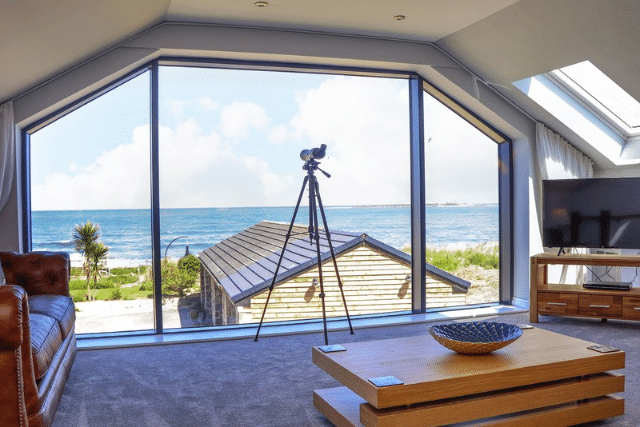
The Waves, Amble Ref 1130502
In most cases, you’ll pay the higher Stamp Duty Land Tax (SDLT) rates when buying a holiday home or second property. These higher rates apply if:
If all of these conditions apply, you’ll generally be charged the additional 5% surcharge on top of the standard SDLT rates.
You don’t need to own an entire property for the higher rates to apply. Even a partial share in another home, holiday property, buy-to-let investment or inherited residential property may mean you’re liable for the surcharge.
For example, if you own 50% of a flat with a partner and then purchase a holiday cottage in your own name, you may still have to pay the higher SDLT rates because you already have an interest in another residential property.
Stamp duty rules treat married couples and civil partners as a single unit in many circumstances.
This means that if your spouse or civil partner owns another residential property worth £40,000 or more, you may still be subject to the higher rates, even if the new holiday home is being purchased solely in your name. The main exception is where couples are permanently separated and living apart.
Many buyers are surprised to learn that the surcharge can still apply if they haven’t sold their existing home before completing on a new purchase.
For example, if you buy a holiday home while still owning your main residence, you’ll usually pay the higher rates because you’ll own more than one property at the end of the completion day.
However, different rules may apply if you’re replacing your main residence. In some circumstances, you may be able to reclaim the surcharge if you sell your previous main home within the permitted time limit.
There are a few situations where the additional 5% SDLT surcharge may not apply:
For most holiday home buyers, however, the higher rates will usually apply because they are keeping their existing home and purchasing an additional property.
This example uses the higher rates. Each band is taxed separately, and the total is the sum of the three amounts.
| Price band | Rate | Part of price in band | SDLT |
|---|---|---|---|
| Up to £125,000 | 5% | £125,000 | £6,250 |
| £125,001 to £250,000 | 7% | £125,000 | £8,750 |
| £250,001 to £500,000 | 10% | £250,000 | £25,000 |
| Total | £500,000 | £40,000 |
The short answer is no. First-time buyer relief is designed to help people purchase their first main residence and cannot be claimed on a holiday home or holiday let property. As most holiday lets are bought as additional properties or investment purchases, they do not qualify for this tax relief.

Understanding your stamp duty liability before you buy can help you budget with confidence and avoid unexpected costs later in the process. Here are a few simple ways to stay on top of your SDLT obligations:
For more information on holiday home ownership, tax considerations and getting the most from your investment, explore our owner resources and guides.
Not exactly. Stamp Duty Land Tax (SDLT) only applies to property purchases in England and Northern Ireland. If you’re buying a holiday home elsewhere in the UK, different taxes apply. Scotland uses Land and Buildings Transaction Tax (LBTT), while Wales charges Land Transaction Tax (LTT). Both have their own rates, thresholds and rules, so it’s important to check the relevant system before buying.
Possibly. If you pay the additional property surcharge because you still own your previous main residence when you buy a new property, you may be able to claim a refund if you sell your former main home within three years. The rules can be complex, so it’s worth seeking professional help from experts if you think you may qualify.
It can be a good idea, particularly if you already own property or are unsure how the SDLT rules apply to your circumstances. Through Zeal Tax, owners can access specialist guidance on stamp duty, holiday lets and other property tax matters, helping you make informed decisions before you buy.
Thinking about switching agents or listing your property for the first time? Call our local Northumbria team on 01665 830783 or complete the form below to request your FREE Owner Guide.
Disclaimer
Northumbria Coast and Country Cottages can’t advise you on, and isn’t responsible for, tax matters in relation to your holiday let and the above should not be taken as such, rather as a prompt of the issues involved for further consideration. As always, please read the relevant laws, regulations and guidance and seek advice from external experts where you require it. Northumbria Coast and Country Cottages hopes that by pointing you in the direction of an expert in the field, it’s starting you off on the right foot, and you can read into this matter further and seek your own advice from Zeal, or your chosen advisor, as and when you feel it’s needed. We cannot make any representations or warranties of any kind as to the competency, qualification, fitness for purpose, accuracy, reliability, suitability, or availability of Zeal’s offers, products or services. If you choose to enter into any arrangement for the supply of goods or services of a supplier listed in this blog or links, you do so entirely at your own risk. Any such arrangement is between you and the supplier. We are not a party to it. We shall not be liable for any loss or damage arising under or in connection with any such arrangement or any action or decisions you take or do not take as a result of reading the above or any loss suffered as a result.
by Gaynor Anderson / Owners

Hi, I'm Gaynor and I joined the Lakes team in Jan 2020. I live and work in the beautiful Lake District! My passion is anything out...
Read More About Author
In this guide, we’ll explore the benefits of professional holiday let management in Northumberland, what to look for in...

Key insights from the Holiday Letting Outlook Report 2025 Despite growing concerns around cost of living and overseas travel...

Thinking about investing in a holiday property? Northumberland is one of the UK’s most sought-after destinations for holiday lets,...
